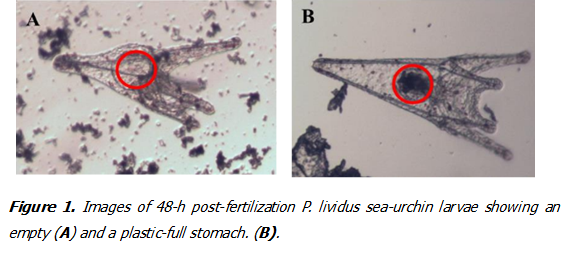
A new study published in Environmental Pollution (DOI: 10.1016/j.envpol.2026.129552) shows that microplastics small enough to be ingested by marine larvae are, in most cases, no more harmful than natural, unpolluted sediment particles. Led by Prof. Ricardo Beiras of the University of Vigo, the ECOTOX team tested twenty plastic materials using one of the most sensitive tools in marine ecotoxicology: the early life stages of the sea urchin Paracentrotus lividus.
The materials included nine commercial plastics, both conventional polyethylene bags and compostable alternatives, and eleven plastic litter samples collected from beaches, the open sea, rivers, reservoirs and agricultural soils across Europe within the EU H2020 LABPLAS project. All were compared with fine-grained sediment from an unpolluted site in the Ría de Vigo. The experiments were carried out at the Toralla Marine Science Station (ECIMAT-CIM).
Natural Particles as a Missing Reference
The perception that microplastics pose a high risk to aquatic ecosystems is largely based on laboratory assays using very high particle concentrations, often without natural particle controls. Since mineral and organic particles are ubiquitous in natural waters and can physically interfere with filter-feeding organisms at high densities, comparing plastics with clean sediment makes it possible to isolate plastic-specific effects.
Limited Toxicity of Plastic Particles
Only three of the nine commercial plastics and one of the eleven litter samples inhibited larval growth more than the natural sediment, and none showed a toxicity threshold significantly lower than that of the reference particles. Environmentally weathered plastic litter showed particularly low toxicity: ten of the eleven samples allowed better larval growth than the same loads of natural sediment. Two compostable bags, however, showed additional toxicity, pointing to the presence of harmful chemical additives.
Implications for Risk Assessment
The toxicity thresholds obtained, between 9.3 and over 100 mg/L, are above the levels of suspended particles normally found in open marine waters. Plastic particles would therefore represent an ecological risk only if plastic were the main component of suspended particulate matter, which has never been reported in natural habitats. These results stress the need to include natural particle controls in any laboratory study aiming to provide a reliable assessment of the environmental risk of microplastics.
Reference:
Beiras, R., Vilas, A., Huertas, M., Abad, R., López-Ibáñez, S. (2027). Ingestible Microplastics Derived from Conventional and Compostable Plastic Materials Exhibit Similar Embryotoxicity to Naturally Occurring Unpolluted Particles. Environmental Pollution, 412, 129552. https://doi.org/10.1016/j.envpol.2026.129552