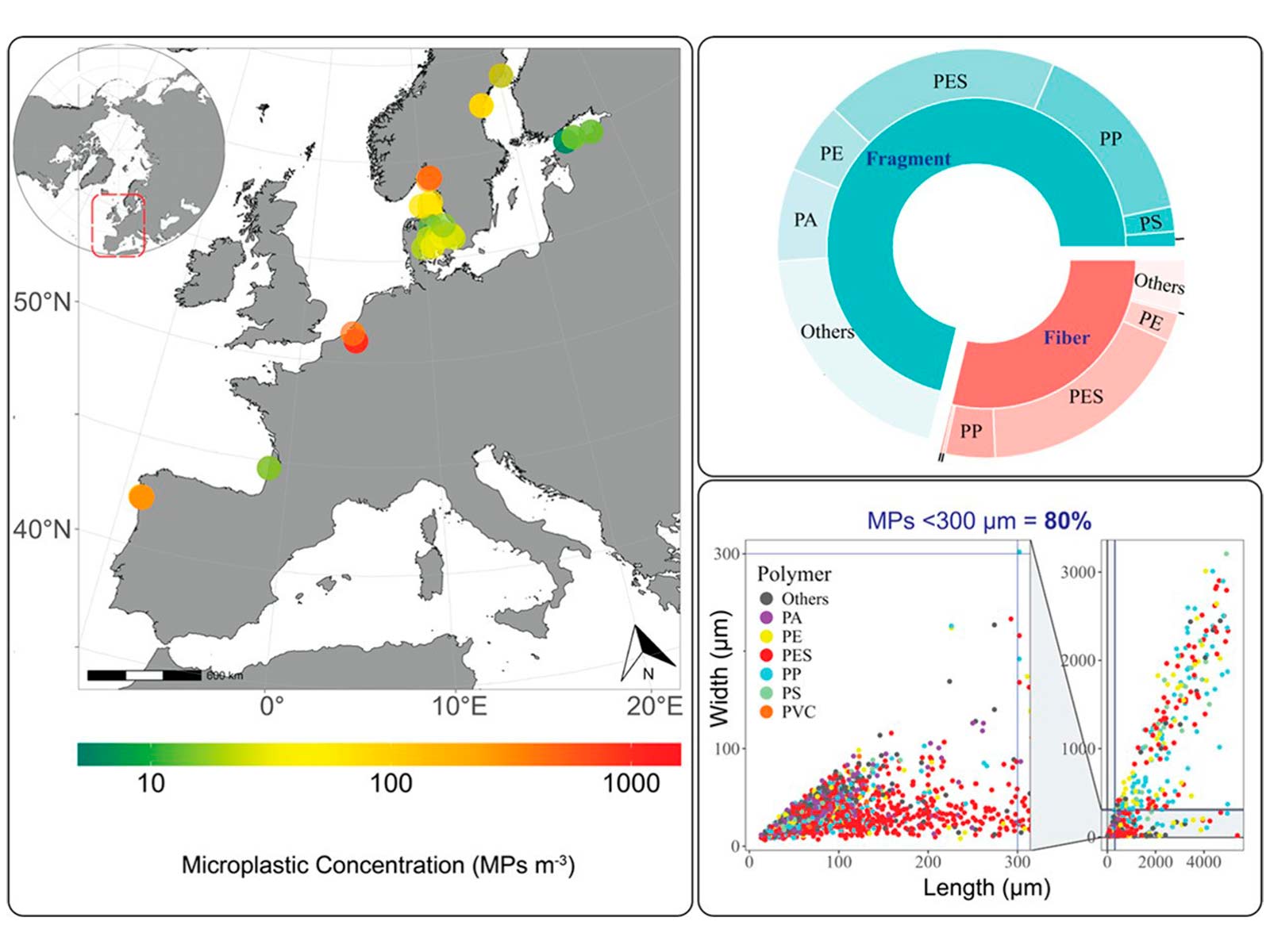
A landmark study published in Environmental Advances (DOI: 10.1016/J.ENVADV.2025.100644) has, for the first time, mapped small microplastics (10 µm–5 mm) across a wide range of coastal environments along the European Atlantic seaboard. Led by Dr. Natalja Buhhalko (Tallinn University of Technology) with contributions from 19 international experts—including Prof. Ricardo Beiras of the University of Vigo—researchers employed a harmonized sampling strategy to ensure data comparability across sites
By standardizing both equipment and protocols, the researchers could directly compare microplastic abundance and characteristics across 34 study sites.
Stark Differences in Concentration
Microplastic concentrations varied dramatically—from fewer than 10 particles per cubic meter in the Gulf of Finland to more than 1,600 particles/m³ in Belgium’s heavily industrialized Scheldt estuary. In most locations, over 80 percent of particles measured under 300 µm in size and were dominated by polyester, polypropylene, and polyethylene fragments. Notably, manta‑net sampling consistently underestimated both total microplastic counts and larger-size fractions when compared with filter-pump sampler results
Implications for Monitoring and Policy
These findings highlight critical “hotspots” of plastic pollution that demand targeted monitoring and mitigation measures. Estuaries and wastewater effluents were identified as hotspots for microplastic pollution, whereas offshore waters and sparsely populated regions exhibited significantly lower concentrations, highlighting the critical role of land-based sources in shaping MP distribution patterns.
Towards a Standardized European Monitoring Network
This study establishes a critical foundation for long-term, comparative monitoring programs and paves the way for science-driven policies to address the mounting crisis of microplastic pollution in Europe’s coastal waters. While acute exposure to the current concentrations of MPs in the water column in these regions is unlikely to pose an immediate threat to the marine pelagic food web, the projected increase in plastic production, coupled with the low degradability of plastics and chemical leaching, underscores the urgency for mitigation measures. Proactive efforts to reduce plastic pollution are essential to safeguarding marine ecosystems and mitigating impacts under future scenarios of escalating plastic waste driven by a growing global human population.